
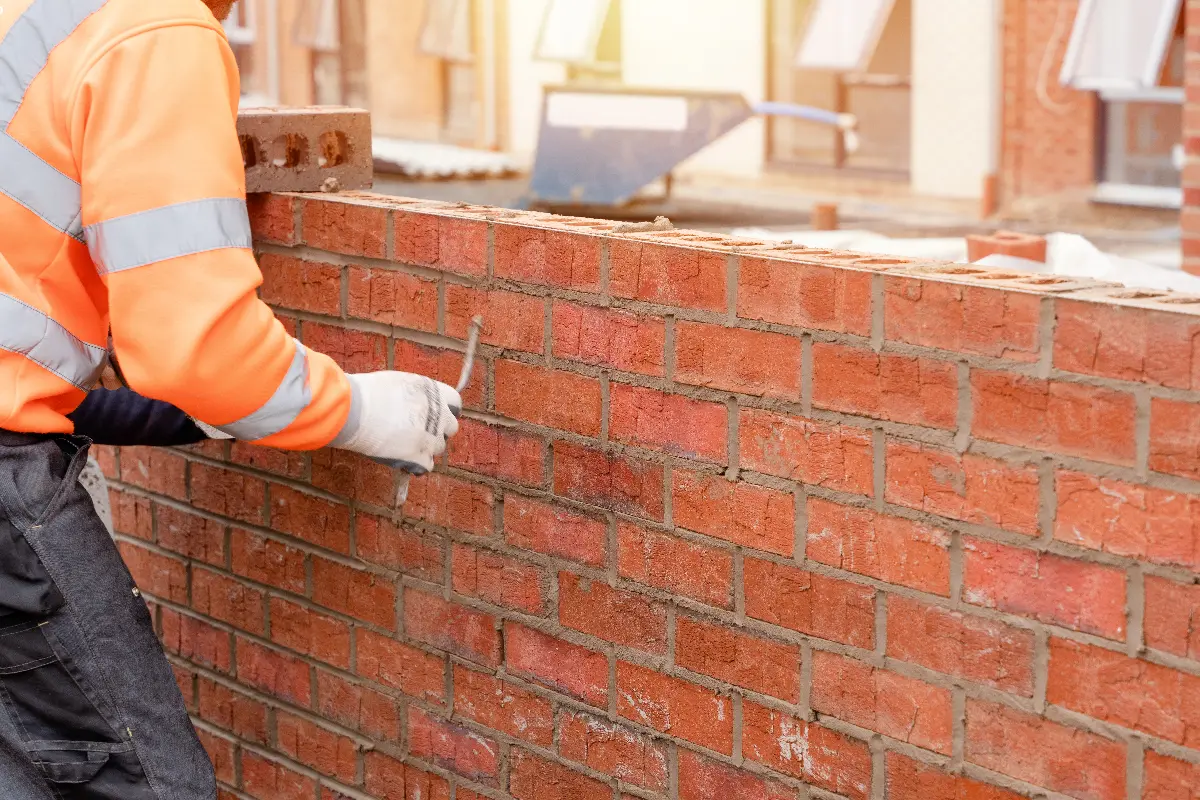
Repointing
Repointing
Raked out to depth, then pointed in a mortar the brickwork can live with.
Ask about repointing
Tell us what is happening and we will come and look.
The work
The mortar has to be softer than the brick
Mortar is meant to be the sacrificial part of a wall. It should be softer than the brick so that movement and moisture work through the joint rather than through the brick face. A hard cement mortar reverses that: the water leaves through the brick instead, and the face spalls off.
Proper repointing means raking the old joint out to a real depth, brushing and damping the joint, and filling it with a mortar matched to the wall in strength and colour. On soft stock brick and on period property that usually means a lime mix.
- Lime mortar used on soft and period brickwork rather than cement by default.
- Joints raked out to depth, which is the part most people skip.
- A sample panel offered on a front elevation so you approve the colour.
- Spalled bricks replaced while the wall is open, which saves a second visit.
Why TJM
Why customers choose us
- A family-run business that has built up an enviable reputation across West London.
- Over 25 years of experience on roofs, roofline, brickwork and the ground around the house.
- High standards on every job, whatever its size, from a slipped tile to a full re-roof.
- Affordable pricing, with the figure in writing before any work starts.
- Our goal is to meet and exceed the expectations of every customer.
What's included
What repointing covers
The price
Repointing costs
What repointing costs comes down to what you actually have, not a price list. Two jobs that sound identical can be an hour of work or a week of it, which is why we do not price roofing over the phone. We come and look, then put a figure in writing.
- Area of wall, and how hard the existing mortar is to cut out.
- Whether a lime or cement mix is specified.
- How many bricks need replacing at the same time.
- Access and scaffolding, which on a full elevation is a real part of the cost.
Next step
Get a price for repointing
Send the form or ring us. We will come and look at what you actually have, then put a figure in writing.
Our work
Read the reviews, then look at the jobs
What customers have said about the work, collected from the places they left it.
Read customer feedback straight from our MyBuilder profile, where every review is tied to a job we were hired for, and see finished work on Instagram as it comes off the scaffold.
How it works
How a repointing job runs

Step 01
Assess the wall
Brick hardness, existing mortar and exposure decide the mix, so we look before quoting.
Step 02
Sample panel
On a visible elevation we can point a small area first so you can see the colour and profile.
Step 03
Rake and point
Cut out in sections, damped down, pointed, and the joint struck to match.
Step 04
Protect and clear
Kept damp while it cures where the weather demands it, then cleaned down.
Questions
Repointing: common questions
The questions we get asked most often about this work. Anything else, ring and ask.
Still not sure? Ring and ask. It is usually quicker than typing it out, and you will speak to the person who would do the work.
How do I know if my pointing needs doing?
Why lime instead of cement?
Can you repoint just the damaged areas?
How long does repointing last?
Can you repoint in the rain?
You may also need
Related work
Where we work
Roofers across West London
We work across the west London boroughs and the towns along the river. If you are just outside the list, ring and ask. We will tell you straight whether it is a journey we can make work.
- Ealing
- Northfields
- Acton
- Chiswick
- Shepherds Bush
- Fulham
- Hounslow
- Kew
- Richmond
- Twickenham
- Hampton
- Kingston